Insights into our collections
Endangered Species - Sharing Specimens While Protecting Plants
How the Convention on International Trade in Endangered Species of Wild Fauna and Flora (CITES) affects the cataloguing and display of RHS Wisley Herbarium specimens
By Jackie Tetley and Louise Gunner
Jackie Tetley is one of two herbarium digitisation staff responsible for imaging specimens and publishing them on the RHS Digital Collections website. Over 91,000 herbarium specimens can be viewed free-of-charge online, with more being added all the time.
Louise Gunner manages herbarium specimen data on the BRAHMS database, uploading and ensuring accurate and comprehensive content. This data is then used to create labels for new specimens, as well as for research, publications and online.
While browsing through our expansive online collection of herbarium specimens, you may notice that some of the images have sections of label data concealed. This spans from orchids collected in the 1850s to recent Galanthus specimens.
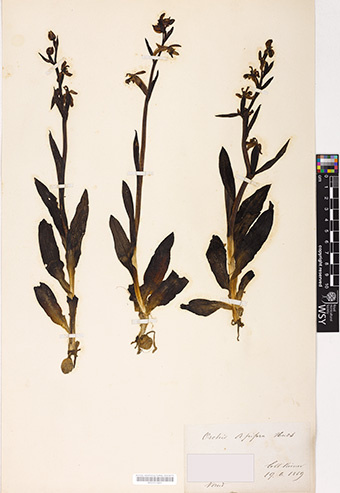
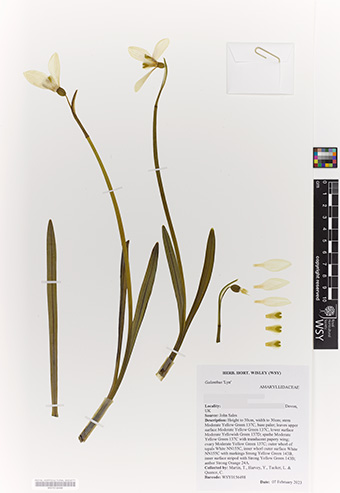
Left: Ophrys apifera. Right: Galanthus ‘Lyn’
This is because many of these plants feature on the lists published by the Convention on International Trade in Endangered Species of Wild Fauna and Flora (CITES). CITES is an international agreement to safeguard plants and animals by the restriction of their global trade - over 40,000 species of plants and animals (including derived products), are found within the list.
Why we collect these specimens
It is important to collect examples of these specimens even though, and perhaps especially because, they are endangered. It enables scientists to study aspects of the specimen without needing to collect their own samples, ensures an historic record of the plant, and means people around the world can view these unique specimens via our website.
Why we may hide a collection location
Part of the information that is usually recorded for a herbarium plant specimen is the location where it was found. If a plant species is identified as being on the CITES list, we first the Convention’s two appendices.
Appendix one covers species that are threatened with extinction, while appendix two covers species whose trade must be controlled to “avoid utilization incompatible with their survival”.
We then digitally conceal specific locale details on the herbarium label before we publish the image online.
Wild-collected and cultivated specimens
Many of our specimens were collected in the wild, and date back decades or even centuries! However, because there could still be a plant colony in place, concealing this location helps ensure that plants are not removed illegally.
Even if we believe a specimen to have been privately cultivated, we still hide key parts of the source location. This is because thefts of rare plant material such as Galanthus cultivars unfortunately can occur. By limiting location information, we help ensure specimens can continue to be protected so they can be admired by all.
How we identify specimens that appear on the CITES list
There are over 34,000 plant taxa included under CITES. This includes plants within the families Euphorbiaceae, Orchidaceae, Sarraceniaceae and more. We undertook an initial pass comparing all the taxa present in our herbarium with those found in the CITES list and flagged the records on our BRAHMS herbarium database. We now regularly compare any new specimens added to the herbarium database against the CITES list and mark them up in the same way. We also periodically review the CITES list for changes that may affect the collection.
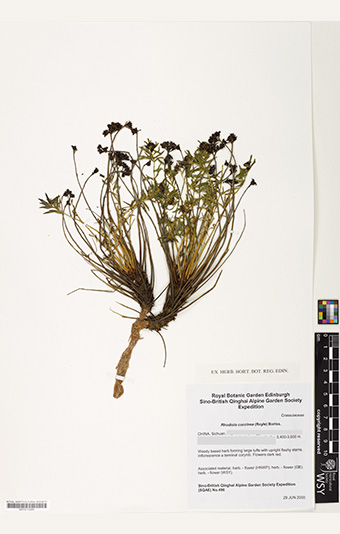
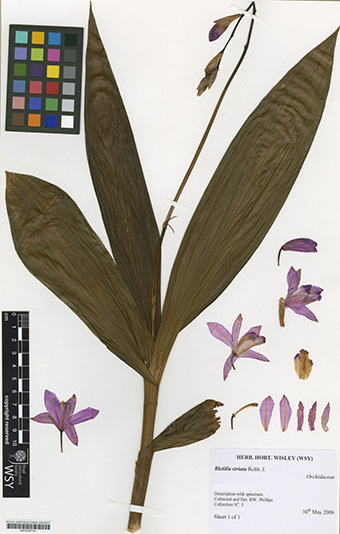
Left: Rhodiola coccinea. Right: Bletilla striata
How we conceal location information on published specimens
When an herbarium specimen is imaged, its unique barcode is checked in our BRAHMS database against the latest CITES updates from the data curator. If the specimen appears on the CITES list, an additional step is added into the digitisation process.
The image file is opened in editing software, and any detailed location-specific information, including latitude and longitude if present, are masked out. Both an edited and an unedited version of the image are saved, but only the edited version is published online.
As a result, these rare specimens can be viewed from anywhere in the world in high detail, while their exact location is protected for future generations.
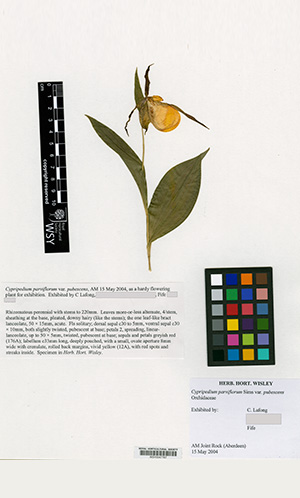
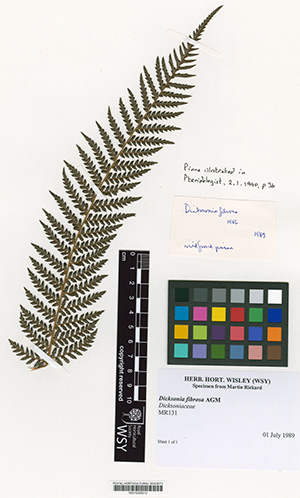
Left: Cypripedium parviflorum var. pubescens. Right: Dicksonia fibrosa
Author
Jackie Tetley and Louise Gunner, Herbarium Curator (Data) and Herbarium Curator (Digitiser), RHS Garden Wisley
Published
2 July 2026
Insight type
Short read